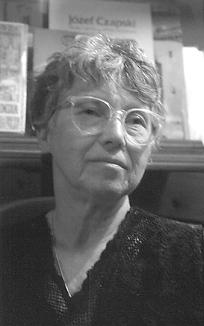
6-8-2004
NATALYA GORBANEVSKAYA
Наталья
Евгеньевна
Горбаневская
(b. 1936
-
† 1-12-2013)
Obituary
| |
GORBANYEVSKAYA,
who graduated from the Philological Faculty of Leningrad University in 1964,
has worked as an editor of technical information and a translator. Only nine
of her poems are known to have appeared (1973) in officially
authorized Soviet journals, though her verse has circulated privately and a
collection has been published abroad. Gorbanyevskaya has been a leading
civil rights activist, one of the seven to demonstrate in Ted Square on 5
August 1968 against the Soviet invasion of Czechoslovakia. Because of her
infant child, she was not tried along with the other demonstrators, and she
continued to agitate on their behalf, compiling an account of their trial,
Noon (published in England as Red Square at Noon). In December
1969 Gorbanyevskaya was herself finally arrested, and in April 1970 was
declared to be suffering from schizophrenia and placed in a psychiatric
prison hospital, first in Moscow, then in Kazan, where a course of drug
treatment was administered. There has recently been a good deal of agitation
in the West about the misuse of psychiatry in the Soviet Union as a means of
dealing with dissenters, and whether for this reason or for some other,
Gorbanyevskaya was released in February 1972. She is now recovering in
Moscow from her ordeal. |
|
|
|
One might
suppose that Gorbanyevskaya verse would reflect her political activity. It is,
on the contrary, intensely personal and non-public. It transcends politics, not
accusing, but describing the psychic reality of her situation. One generation,
has had the capacity of transmute her suffering into a universal image. The
staccato pulse of her work, the near-hysterical shrillness, recall the poetry of
that other poet of suffering, the great Marina Tsvetayeva. In Gorbanyevskaya’s
love lyrics, the old Russian mystique of regeneration through suffering is
evoked (this appears, less intensely, in Yuli Daniel’s poetry too). Physical
love becomes an ordeal like Christ’s on the Cross. Gorbanyevskaya has had the
immense courage to remain vulnerable. Hers is the poetry of pain, of separation,
of isolation, of despair, of threatening disaster, of disaster present.
Daniel Weissbort in
Post-War Russian Poetry,
Edited by Daniel Weissbort, Penguin Books, London, 1974, ISBN
0-14042-183-1.
LINKS:
|
Articles and poems in English |
O |
O |
O |
O |
O |
|
Biographies in Russian |
O |
O |
O |
O |
O |
|
Poems in Russian |
O |
O |
O |
O |
O |
| |
O |
O |
O |
O |
O |
|
Что о беде да что о красоте,
когда само обмана захотело
нагое, как разбойник на кресте,
счастливое, беспамятное тело.
Кто плачет и курлычет надо
мной,
перелетая снежную границу,
где ветер зимний, ветер ледяной
выстуживает светлую криницу.
И в неземной сведенности
страстей,
в разлуке рук, в разреженном дыханье,
как на кресте, и тихий хруст костей,
как на костре и треск, и полыханье.
граница света
1964
|
Why speak of trouble, or beauty
when the happy body, forgetful,
naked as the thief’s upon the cross,
itself wants to be deceived.
Who weeps, who cries above me,
crossing the frontier of snow,
where the wintry wind, the icy wind,
chills the bright waters of a spring.
And in this unearthly merging of passions,
this parting of hands, this rarefied breath,
is the cross, the muffled breaking of bones,
and at the stake the crackle and the blaze.
|
|
| |
– Не тронь меня! – кричу
прохожим,
не замечающим меня.
Чужие комнаты кляня,
слоняюсь по чужим прихожим.
Но кто пробьет окно в стене?
И кто протянет руку мне?
Горю на медленном огне.
граница света
1964 |
“Don’t touch me!” I scream at passers-by –
they do not even notice me.
Cursing the rooms of other people,
I bang about their anterooms.
But who will knock a window through?
Who will hold out his hand to me?
I am roasting over a slow fire.
|
|
|
Е.Рейну
Шарманка,
пой,
шарманка,
вой,
шарманка,
в прорубь головой,
ах, в заколоченном саду
поет шарманка раз в году.
И снег идет, и тает лед,
и тает снег, и лед идет,
ломая льдины на пруду,
поет шарманка раз в году.
И тает снег, и плачет пес,
и я своих не прячу слез,
и щек намокших не утру,
кричит шарманка на ветру.
Шамань, мошенничай, шуми,
но душу вынь и всю возьми,
на заколоченном пруду,
и в замороженном саду,
и всюду, в небе и в аду,
поет шарманка раз в году.
граница света
1964 |
To Ye. Rein
Play, barred-organ, wail,
stick your head through the ice-hole,
in the boarded-up garden
the barrel-organ plays once a year.
The snow falls, and the ice thaws,
and ice-floes on the pond are breaking –
the barrel-organ plays once a year.
The snow thaws and a dog whines,
and I do not try to hide my tears,
and I do not wipe my cheeks –
and the barrel-organ cries in the wind.
Swindle, play the shaman, shout
but take all, draw the spirit out.
On the boarded-up pond,
and in the frozen garden, and
in heaven, hell, and everywhere,
the barrel-organ plays once a year.
|
|
|
И вовсе нету ничего – ни
страху,
ни цепененья перед палачом,
роняю голову на вымытую плаху,
как на случайного любовника плечо.
Катись, кудрявая, по скобленым
доскам,
не занози разинутые губы,
а доски ударяют по вискам,
гудят в ушах торжественные трубы,
слепит глаза начищенная медь,
и гривы лошадиные взлетают,
в такое утро только умереть!
. . . . . . . . . . . . . . . . . . . . . . .
В другое утро еле рассветает,
и в сумраке, спросонья или что,
иль старый бред, или апокриф новый,
но все мне пахнет стружкою сосновой
случайного любовника плечо.
потерянный рай
1965
|
And there is
nothing at all---neither fear,
nor a stiffening before the executioner.
I lay my head upon the hallowed block,
as on a casual lover's shoulder.
Roll, curly head, over the planed boards,
mind you don't get a splinter in your parted lips---
the boards bruise your temples, the trumpets
sound solemnly in your ears;
the polished copper dazzles you,
the horses' manes toss---
O, what a day to die on!
Another day dawns sunless,
and in the semidark---either
through sleepiness, some ancient madness,
or new apocrypha---my lover's shoulder
still smells to me of pine shavings.
|
|
| |
неоконченные стихи
А.Рогинскому
Уж за полночь, и фонари
горят через один,
теперь до утренней зари
по городу броди.
Ночь соскребла с фасадов год
и соскоблила век,
и город пуст, как огород,
но город, как ковчег,
плывет, плывет и вот вплывет
в рассветный холодок,
и меж окон и у ворот
проступит век и срок,
и ты очнешься на мосту,
над Яузой, в слезах...
потерянный рай
1965 |
UNFINISHED
POEM
Already past midnight, and every
other street
lamp burns.
Wander about the town until
the sun appears at dawn.
Night has erased the year, the age
from the buildings’ façades.
The town is bleak as a kitchen garden,
but the town is like the ark –
floating, floating, now it sails
into dawn’s bitterness,
and between the windows, at the gates,
the age, the date appears,
and on the bridge over the river,
you return to yourself, weeping…
|
|
И к сладости дождя примешивая
слезы,
губами славливая эту соль ресниц,
я счастлива. Ты счастлива? Проснись,
еще укрыты в мокрых тучах звезды,
и в темных небесах лишь полосы
воды
вычерчивают видимые знаки,
а свет луны в далекое изгнанье
неправедные сплавили суды.
потерянный рай
1965 |
And mingling tears with the sweetness of the rain,
celebrating with my lips the salt of the eyelashes,
I am happy. You are happy? Wake up –
the stars are still wrapped in damp clouds,
and in the dark heavens only zones of moisture
leave any visible traces,
and iniquitous courts have banished
the moonlight into distant exile.
|
|
| |
Сверчок поет в Сочельник,
в январский понедельник,
и звон колоколов
плывет среди сугробов,
едва-едва затронув
их краешки крылом.
Поет сверчок в Сочельник,
молчит мой гость случайный,
а звон колоколов
в глубоком снеге тонет,
в высоком небе тает,
в пространстве без углов.
Зато в углу у печки
сверчки, как человечки,
стрекочут, а кругом
и тает звон, и тонет,
но на прощанье тронет,
коснется нас крылом.
потерянный рай
1965 |
The cricket sings on Twelfth-night,
on a January Monday,
and the ringing of the bells
floats among the snow-drifts,
barely, barely touching
their edges with its wing.
On Twelfth-night sings the cricket,
my chance visitor is silent,
and the ringing of the bells
drowns in the deep snow,
melts in the high sky,
in space that is cornerless.
But, in the corner by the stove,
like homunculi, the crickets
chirp, while all around
the ringing melts, and drowns,
but touches, in departing,
brushes us with its wing.
|
|
Любовь, любовь! Какая дичь,
какая птичья болтовня.
Когда уже не пощадить,
не пожалеть меня,
то промолчи. Да, промолчи,
не обожги моей щеки
той песенкой, что, заучив,
чирикают щеглы.
Той песенкой, где, вкось и
вкривь
перевирая весь мотив,
поэт срывается на крик,
потом на крики птиц,
потом срывается на хрип,
на шепот, на движенье губ,
на темное наречье рыб
и на подземный гул.
Любовь из каждого угла,
всего лишь пища для стихов,
для глупой песенки щегла,
для крика петухов.
Так промолчи. И помолчи.
Коснись рукой моей щеки.
Как эти пальцы горячи.
Как низки потолки.
потерянный рай
1965 |
Love, love! What nonsense it is,
what birdbrained idiocy.
When it is already too late
to spare me or to pity me,
then keep silent.
Yes. keep silent,
do nor inflame my cheeks
with that song finches learn
by heart to sing.
That song, in which the poet,
at random, traducing the theme,
cries out, then imitates
the clamour of birds,
sighs, squeaks, whispers,
moves his lips, breaks into
the obscure speech of fish –
and finally, a subterranean rumble.
Love from every quarter,
at best, simply food for verse,
for the finch’s foolish song,
for the crowing of cockerels.
So keep silent. Stop talking,
Stroke my cheek with your hand.
How hot these fingers are,
How low are the ceilings.
|
|
| |
|
Не потому что ты, не потому что я,
а просто выгорала из-под ног земля.
Не потому что
я, не потому что ты,
а просто лето, нас обняв обоих,
поставило меня перед тобою
так близко, что уже не отойти.
Вчерашний жар с железных крыш спадал,
и духота стихала перед утром,
но, возносясь над сонным переулком,
из трех окон не утихал пожар.
И при разлуке слез не пролилось
ни из одной глазницы обожженной,
и до сих пор, как факел обнаженный,
я вся смолой пропитана насквозь.
потерянный рай
1965 |
Not because of you, not because of
me, just that
the earth was fire underfoot.
Not because of me, not because of you, just that
the summer, embracing both of us together,
put so close to you
there could be no escape.
Yesterday's heat ebbed from the iron roofs
and by morning the close atmosphere was dissipated
but, from three windows, the fire rising
over the sleeping street did not abate.
At parting, tears did not flow
from a single scorched eye-socket,
and since then, like a naked torch,
I have been steeped in pitch.
|
|
|
Любовь проотрицав,
попасть в ее тенета,
отнять от слов темноты,
как руки от лица,
и взвидеть света взрыв
над городом и лесом,
как Кирие элейсон,
как мартовский призыв,
и моцартовский хор
над громким ледоходом,
как тот блаженный холод,
плывущий с белых гор.
темнота
1966
|
Denying love,
to be caught in its snare,
to lift the dark from words
as hands from the face
and to see the light explode
over town and forest,
like a Kyrie Eleison,
like a March-day slogan,
and a Mozart chorus
above the roar of drift-ice,
like the blissful cold that flows
down from the white mountains.
|
|
| |
Здесь, как с полотен, жжется желтый полдень,
и самый воздух, как печаль, бесплотен,
и в полной тишине летучим войском
висят вороны в парке Воронцовском.
Но ветхая листва
из лет запрошлых
к моим локтям цепляется, к ладошкам
прокуренным, и в спутанные кудри
пустой кустарник запускает руки.
Я так далёко отошла от дома,
как самолетик от аэродрома
в густом тумане в темень отплывая...
Жива, мертва, листва или трава я?..
темнота
1966
|
Here, as in a
painting, yellow noon burns,
like grief,
the air itself is incorporeal,
and in the
utter silence, a winged army,
the crows in
Crow Park hover.
But the
mouldering leaves of years past
cling to my
elbows, to the palms
of my hands
that reek of cigarettes,
and the bare
shrubbery claws my tangled curls.
I have
wandered so far from home,
like a plane
from its aerodrome,
which in dense
fog strays into the dark…
Am I living,
dead, leaves or grass?
|
|
В моем родном двадцатом веке,
где мертвых больше, чем гробов,
моя несчастная, навеки
неразделенная любовь
средь этих гойевских картинок
смешна, тревожна и слаба,
как после свиста реактивных
иерихонская труба.
темнота
1966 |
In my own twentieth century
where there are more dead than graves
to put them in, my miserable
forever unshared love
among those Goya images
is nervous, faint, absurd,
as, after the screaming of jets,
the trump of Jericho.
|
|
| |
Под
дождь, как под душ для души,
плашмя и навзничь и ниц,
уйми эту дрожь, не дрожи,
не дрогни концами ресниц,
замри, не дыши, но в душе
протяжное что-то пропой,
и дождик по крыше уже
стеклянною нотной строкой,
звериной тропою ночной,
замри, не дыши, пережди,
покудова тот проливной
до донышка не пережит,
не прожит ни ливень, ни свет
внезапный в разрыв облаков,
ни вдоль луж след
дрожащих моих каблуков.
темнота
1966 |
As under a shower for the soul,
lie supine, prostrate in the rain,
cease your trembling, do not
tremble,
do not flutter your eyelash ends,
stand still, hold your breath, but
sing
a long drawn-out song in your
heart,
already the rain on the roof
is like the music of glass,
like an animal’s nocturne path,
stand still, hold your breath, wait
until the torrential rain
is experienced through and through,
and the shower, the sudden light
that shines through a break in the
clouds,
and alongside the pools
the marks of my trembling heels.
|
|
|
Есть
музыка, а больше ни черта -
ни счастья, ни покоя и ни воли,
во всем остекленелом море боли
лишь музыка - спасенье, чур-чура.
Да,
чур-чура, на час, на полтора,
когда ни завтра нету, ни вчера,
среди зимы про золотое лето
свистит лесною иволгою флейта.
Но
краткому забвению конец,
смолкает человеческий птенец,
и снова в пустоту, в метель, во мглу,
всё босиком по битому стеклу.
Звезда с
небес и сладостный сонет -
тебя уже ничто не обморочит,
и ты проговоришь "Покойной ночи",
а молча прокричишь "Покоя нет".
ангел деревянный
1967 |
Only music, nothing else, is left –
neither happiness, nor peace, nor
freedom;
in all this glassy sea of suffering
the only saving grace is music.
Yes, for an hour or maybe more,
where there is neither past nor
future,
in the depths of winter a flute
sings like the woodland oriole of
summer.
But this brief moment of oblivion
ends,
the human bird falls silent and
again, barefoot over broken glass,
we enter the emptiness, the
blizzard and the dark.
A star from the heavens, an
enchanting sonnet,
nothing will beguile you anymore,
and “Sleep peacefully”, you will
murmur
and silently cry, “There’s no peace
left”.
|
|
| |
Что навсегда? Что значит навсегда?
В часах античных капает вода,
в других пересыпается песок,
а мой будильник целится в висок
и пробудит - уж это навсегда -
от краткого, раскрашенного сна
меня, тебя и каждого, мой друг,
для вечности, для новых, вечных мук.
ангел деревянный
1967 |
Forever? What does forever means?
In an antique clock water drips,
in another sand pours,
while my alarms levels at my
temples
and wakes me – this time it is
forever –
from the brief dream in colour;
me, you, and each of us, my friend,
for eternity, for new eternal
pains.
|
|
Засмейся,
несгораемая плоть,
захохочи, летя в костер купальский,
души моей сияющий оплот,
отрада этой полночи прекрасной.
А кружево
безлунных облаков -
прекрасной этой полночи ограда,
и узелок заплаканных платков
повешен на ворота Цареграда.
Лети,
лети, за облаки, за тень
волны морской, за отраженье тени
костра... Сестра, все небо облететь!
Мои крыла, как листья, облетели.
ангел деревянный
1967 |
Laugh, uncombustible flesh,
laugh loud, plunging into the pool
of fire,
oh shining bulwark of my soul,
joy of this lovely midnight hour.
And this lovely midnight is
screened
by a lacework of moonless clouds,
and the bundle of tear-stained
handkerchiefs
hangs on the gates of Tsargrad.
Fly, fly, beyond the clouds, beyond
the shadow
of the sea-wave, beyond the
reflected
shadow of the fire… My sister, the
whole sky is yours…
Like leaves, my wings have been
shed.
|
|
| |
Как падает затравленный олень,
сминая окровавленные травы,
так загнанный несется к ночи день,
слепой беглец в объятия расправы.
О времена, о нравы! И она,
среди смертей, среди пустых бессмертий,
в безумьи забывая имена,
о Гамлете ли бредит, о Лаэрте ль...
ангел деревянный
1967 |
As brought to bay, the deer falls,
crushing the blood-stained grass,
so the exhausted day rushes towards
night.
a blind fugitive into reprisal’s
arms.
Oh times, oh customs! And she,
amidst the deaths, the empty
immortalities,
forgetting, in her madness, names,
rants on of Hamlet or Laertes…
|
|
Вздохнет,
всплакнет валторна электрички,
недостижимый миф.
По решке проскользнет сиянье спички,
весь мир на миг затмив.
Вспорхнет
и в ночь уносится валторна.
Пути перелистать,
как ноты. О дождливая платформа,
как до тебя достать?
Пустынная, бессонная, пустая,
пустая без меня,
и клочья туч на твой бетон слетают,
как будто письмена,
и,
хвостиками, точками, крючками
чертя по лужам след,
звенят они скрипичными ключами
ушедшей вслед.
июль-сентябрь 1970
Бутырская тюрьма, больничка
тюремные стихи
|
To I.
Lavrentevaya
The train's french horn
sighs, sheds a few tears,
an unattainable myth.
A match gleam trickles through the prison bars,
the whole world is eclipsed.
The horn takes wing, into the night it sweeps.
To flick through tracks
like notes. Oh how am I to reach you,
rainy platform!
Forsaken, sleepless, deserted,
deserted without me---
tatters of clouds like letters drift down
to your concrete,
and leaving a trail across the puddles
of stops, hooks, tails,
like treble clefs they resound after
the departed train.
13th July - 13th September 1970
Butyrka Prison
|
|
| |
Прощай, прощай, прощай,
всегда меня прощай
за то, что не могу
сказать тебе "прощай",
за то, что не могу
запнуться на бегу
и охнуть, и вздохнуть,
и вслед платком взмахнуть.
Не охну, не очнусь,
не вспомню, какова
на ощупь и на вкус
высокая трава.
1968
стихи, не собранные в книги |
Forgive, forgive, always
forgive me that I
am not able to say
to you, my friend, “goodbye”,
that I am not able to stop
myself in mid-flight,
to moan and to sigh,
and wave my handkerchief.
I do not sigh, I do not wake,
I do not remember what
the tall grass in the field
feels like, or how it tastes.
|
Translations
by Daniel Weissbort from
Post-War Russian Poetry,
Edited by Daniel Weissbort, Penguin Books, London, 1974, ISBN
0-14042-183-1.
|
Кто-то мне звонит, звонит по
ночам,
кто-то хочет слышать мой голос, но сам
затаился в трубке, даже не шепча,
ухом зажимая душу у плеча.
Не спи на
закате
СПб.: Лики России, 1996.
ISBN
5-87417-030-8
Обложка Е.Большакова и Л.Корсавиной.
С.231-250.
|
Someone phones, calls me at night.
Someone wants to hear my voice, but himself
has taken refuge in the receiver, not a sigh,
his soul compressed between shoulder and ear..
|
|
| |
Подобрали меня
рифмы в канаве,
кой-как обтряхнули, обмыли,
подбирали мне одежку по росту,
то есть, значит, с чужих детей,
мазали, сводили коросту,
очищали, отчищали от страстей,
прочищали мне уши и мысли,
а случалось, чуть не доконали.
Я их, как умела,
держалась,
а случалось, трепыхнусь, чуть не вырвусь,
загуляю проходными дворами,
чтобы срезать долгий путь напрямки,
но они меня, как пашню, орали,
не сымая с плуга руки,
и давали мне задаром и на вырост
неиспрошенную милость и жалость.
13 восьмистиший и еще 67
стихотворений
Октябрь 1997 ≈ октябрь 1999.
М.: АРГО-РИСК; Тверь: Колонна, 2000. - 80 с.
ISBN 5-94128-016-3
В оформлении обложки использованы фрагменты картины Питера Брейгеля "Падение
Икара". |
from Thirteen Eight-liners
The rhymes picked me in a ditch,
shook me a little, bathed me,
clothed me appropriately for my age,
with means hand-me-downs from other kids,
rubbed oil into me, removed the scabs,
cleaned me, cleansed me of passions,
washed out my ears and my thoughts
and all but finished me off.
|
|
Этот стон у нас, этот вопль,
этот всхлип дактилической клаузулы,
этот вой побирающихся толп
голодая о Лазаре
называется песнею,
то есть стихом,
а кормится плесенью
и толченым стеклом.
Набор
Новая книга стихов.
Март 1994 - февраль 1996.
М.: АРГО-РИСК, 1996. - 48 с.
ISBN 5-900506-37-1
Обложка Станислава Львовского
|
This moan of ours, this sob,
this cry of a dactylic passage,
this howl of the begging mob
hungering for Lazarus
is called a song,
i.e. verse,
and feeds on mildew
and crushed glass.
|
|
| |
Чтой-то вы мне, листья, на ухо
щебечете,
еле слышно шепчете, щеку мне щекочете,
глухоты моей души этим не излечите,
не пролью напрасных слез, вспоминая ночи те -
те, которые, которых, за
которыми
- были, нету, не угнаться сломя голову,
не доехать ни курьерскими, ни скорыми
до росистого рассвета голоногого.
На любовь заточенный нож держу
за пазухой,
угрожаю дождику: "Дождик, перестань!"
Чтой-то вы мне, листья, нашептали на ухо,
вшелестели под ребро, щекоча
гортань…
кларнеть
Почти полное избранное.
СПб.: Лики России, 1996.
ISBN
5-87417-030-8
Обложка Е.Большакова и Л.Корсавиной.
С.231-250.
|
Leaves, something in my ear you twitter
hardly audible, you whisper to my cheek, tickle,
you’ll not cure my soul’s deafness this way.
I’ll not shed tears, remembering those nights
which existed, no more do, and behind which
there’s no catching up, even at breakneck speed,
neither by express train nor direct,
to reach the bare-legged, dewy dawn.
I kept a keen knife, in case of love.
I warn the shower:
“Don’t!”
Leaves, something in my ear you whispered,
rustled in under my ribs, tickled the larynx…
|
|
"Судьба детей ее не беспокоит"
Эта фраза из акта экспертизы,
серебристым пропетая кларнетом,
утеряла окраску угрозы,
но не вылиняла добела при этом.
Хорошо, когда дышат за стеною
сыновья, а не сокамерницы рядом,
хорошо просыпаться не стеная,
глядя в явь, не пропитанную ядом.
Хорошо не ощупывать извилин,
нет ли сдвига, это ты или не ты, мол,
не осевший вдыхать из-под развалин
прах того, что, дай-то Бог, невозвратимо.
Не спи на
закате:
Почти полное избранное.
СПб.: Лики России, 1996.
ISBN
5-87417-030-8
Обложка Е.Большакова и Л.Корсавиной.
С.267-286.
|
“The children’s fate doesn’t bother me”
This, from the diagnosis,
rings out like a silvery clarinet,
has lost the colour of danger,
but my memory’s not been wiped clean of it.
It’s good when the breathing in the next room
is my son’s and not a cell-mate’s;
it’s good to wake up, not groaning
at an envenomed reality.
It’s good not to feel the brain’s convulsions –
has there been a change? – is it yourself, isn’t it?-
not settling down to breathe in, from underneath the
rubble
the dust of what, please God, is irrecoverable.
|
|
| |
Мой Фортинбрас, мой бедный
брат,
вот Дания моя,
она из моего ребра,
и вся она, как я.
И вот тебе моя игра,
теперь она твоя –
и путь добра, и тьма преград,
и тайна бытия.
И всё, и всё мое прими.
Или постой, повремени,
намеренье перемени,
еще ты не король,
ступай, ничем не прогреми,
не трогай эту роль.
1962
стрелок
из
лука
|
My Fortinbras, poor brother,
behold this, my Denmark,
sprung from my side,
the very image of me.
And this, my game, behold,
now it is yours –
the path of virtue, obstacles without end,
the mystery of being.
Take all, all that was mine.
Or else, stop, wait,
and then change your mind.
You’re not yet king.
Leave now, the drums silent,
let this part be.
1962
|
| |
The last six poems:
Translations
by Daniel Weissbort from Russian Women Poets, Modern Poetry in Translation New
Series n.º 20, Edited by Daniel Weissbort, Guest Editor Valentina Polukhina,
King's College, London, University of London, 2002 ISBN 0-9533824-8-6 |
|
|
И, эту
мелодию запев,
мы не сочинили к ней припева,
а как повели нас на расстрел,
стало нам уже не до того,
под стеною стали мы, вспотев,
и стена за нами запотела,
и дрожащий дымчатый рассвет
озарял чужое торжество.
Но эта
мелодия взошла
радугой на сером небосводе,
стебельком, ломающим асфальт,
дождичком в беспамятный четверг,
и скатилась пуля из ствола
крупною слезою о свободе,
и душа из ребер понеслась,
пятаком подпрыгивая, вверх.
Не спи на закате:
Почти полное избранное.
СПб.: Лики России, 1996.
ISBN
5-87417-030-8
Обложка Е.Большакова и Л.Корсавиной.
С.231-250
|
And, having started singing this
melody,
we didn’t compose a refrain for it,
and when we were led out to be
shot,
we didn’t feel like it any longer,
we stood under the wall, breaking
into a sweat,
and the wall started sweating after
us,
and the trembling misty dawn
lit up someone else’s triumph.
But this melody went up
like a rainbow against the gray
vault of the sky,
like a stalk breaking through
asphalt,
like a shower one forgetful
Thursday,
and the bullet rolled down out of
the barrel
like a huge teardrop about freedom,
and the souls rushed out of our
ribs
bouncing like a five-kopek piece,
upward.
|
|
| |
Это пето на заре
завтрашнего утра,
на затоптанной золе
от любви как будто.
Это пето с холодком,
будто бы нетрудно
разжигать костер тайком,
а топтать прилюдно.
Это пето кое-как,
не стараясь чище,
словно жизнь была пустяк,
а не пепелище.
Не спи на закате:
Почти полное избранное.
СПб.: Лики России, 1996.
ISBN
5-87417-030-8
Обложка Е.Большакова и Л.Корсавиной.
С.231-250.
|
This is sung at dawn
of tomorrow’s morning
on the trampled ashes
of love that seemed to be.
This is sung with a chill,
as if it’s not hard
to light a bonfire in secret
and trample it in public.
This is sung any old how,
not trying to be in tune,
as if life had been a trifle,
not a burn-out place.
|
| |
The last 2 poems from:
Contemporary Russian Poetry, A Bilingual Anthology, Selected, with an
Introduction, Translation, and Notes by Gerald S. Smith, Indiana University
Press, Indianapolis, 1993 ISBN 0-253-20769-X |
|
 .
.
DECEMBER 6, 2016
O
my poor Europe’
On August 25, 1968, the seasoned Russian dissident Natalya Gorbanevskaya
(1936–2013) – she had helped smuggle Anna Akhmatova’s poems out of Russia and
edited the samizdat newsletter Chronicle of Current Events – gathered
with six others in Red Square to protest against the Soviet invasion of
Czechoslovakia. She alone escaped arrest because she had her three-month-old son
with her, but for covering the trial of her fellow-protesters in the Chronicle (articles
that were later collected and published in the West under the title Red
Square at Noon) she was arrested in December the following year and confined
to Butyrskaya prison psychiatric hospital. She was released in February 1972,
the year in which Index on Censorship published fourteen of her poems in
its first issue and Daniel Weissbort translated and published the first
book-length selection of her work. In Weissbort’s view, “it is probably true . .
. that political changes in the post-USSR world have . . . rendered her work and
that of other emigré poets almost invisible, since the literary world adheres to
socio-economic realities”. But he goes on to suggest that although “the threat
of official sanction may no longer exist”, her more recent poetry seems “as
dedicated to human freedom – in the sense of freedom from political oppression –
as it ever was”.
Unusually for a dissident Russian intellectual, Gorbanevskaya does not
concentrate purely on the woes of Russians but also considers – as if guiltily –
the fate of the countries of central Europe blighted by occupation. In “O my
poor Europe”, from Flying Over the Snowy Frontier (1978), the collection
on which she was working when she left Russia to settle in Paris, she laments
the damage done by Soviet Communism to parts of Europe, seeing its “Charter of
Liberties” as pitifully inadequate faced with the more brutal “freedom” of
“trucks and armoured cars”. Almost thirty years after the demise of the Soviet
Union, when this poem was first published in the TLS, it
looks as if Europe’s liberal freedoms – so bravely defended by Gorbanevskaya –
may again be facing challenges.
| |
О бедная,
дряхлая, впавшая в детство
Европа, кому ты оставишь в наследство
последний кабак, и последний бордель,
и Хартию Вольностей - о, не в бреду ль
ее сочиняли
бароны и эрлы,
вином успокаивая нервы,
надтреснутые в треволненьях битв,
когда неизвестно, кто прав, кто побит...
О бедная, этот
мой стих надмогильный
- лишь доказательство бессильной
и безысходной любви до конца
к последним судорогам лица
твоего,
иссеченного сетью скважин
окопов, когда пехотинец неважен,
но столько свободы для сквозняков,
грузовиков и броневиков.
|
O my poor Europe
O my poor, decrepit, lapsing-into-infancy
Europe, to whom will you leave
your last bar, last brothel,
and Charter of Liberties, in delirium
composed – wasn’t it – by barons and earls
calming with wine their nerves
cracked in the excitations of battles,
when it’s unknown who’s right and who’s beaten.
O my poor thing, this my graveside verse
is nothing but proof of my powerless
and endless love unto the end
for these final convulsions of your
face, etched with a net of slit
trenches, when the infantryman doesn’t count,
but there’s so much freedom for chill winds,
trucks and armoured cars.
Translated
by G. S. Smith (1987)
|
|


Expresso n.º 2155, de 15 de Fevereiro de 2014
1936-2013 e 1917-2014 A dissidente soviética e um dos políticos checos
que pediram a intervenção da URSS separados pela Primavera de Praga
Natalya Gorbanevskaya e Vasil Bilak
José Cutileiro
Vasi Bilak, secretário-geral do Partido Comunista Checoslovaco em 1968, que
morreu no passado dia 6 deste mês, demente, atado à cama pela família, na sua
casa de Bratislava, trouxe-me a memória e a vontade de a lembrar aqui Natalya
Yevgenyevna Gorbanevskaya, tradutora, poetisa e antiga dissidente soviética que
se finou, na posse de todas as suas faculdades mentais, em Paris, onde vivia
exilada desde 1975, a 29 de Novembro do ano passado — ele, co-autor com mais
quatro altos apparatchiks do seu país de então, a Checoslováquia,
dividida entretanto por mútuo acordo em República Checa e Eslováquia (criando
provavelmente a única fronteira do continente europeu estabelecida em paz) de
uma carta a Leonid Brejnev, secretário-geral do Partido Comunista da URSS,
dizendo--lhe que a existência do comunismo no país estava em risco e rogando-lhe
que pusesse fim por todos os meios ao seu alcance ao Governo de Alexander
Dubcek, responsável por querer estabelecer aquilo a que chamava “o socialismo de
face humana” durante curto período de tempo que ficaria conhecido por Primavera
de Praga, o que foi rapidamente feito pela invasão do país e a ocupação de Praga
por 150.000 soldados do Pacto de Varsóvia, seguindo-se mais repressão a que o
regime chamou “normalização” e protestos veementes que televisões ocidentais
capturaram, sendo o mais conhecido a imolação suicida pelo fogo na Praça de
Venceslau, em Praga, do estudante de filosofia Jan Palach.
A repressão começada por Moscovo e animada por apparacthiks puros e duros
locais - o povo chamava-lhes tankies por terem ajudado os invasores -
dos quais Bilak, filho de camponeses, aprendiz de alfaiate, com carreira
partidária exemplar desde a resistência ao nazismo durante a guerra, foi o mais
famoso e infame, continuou até ao colapso do comunismo na Europa de Leste em
1989 que precedeu a dissolução, comandada de cima para baixo por Boris Ieltsin,
da União Soviética. Para este, bem diferente do seu sucessor Putin que todavia
escolhera com o cuidado de quem escolhe um melão — a supressão da Primavera de
Praga era nódoa tão grande na reputação da Rússia que fizera questão de oferecer
a Vaclav Havel, Primeiro Presidente da Checoslováquia livre cópia da carta a
Brejnev que precipitara a invasão.
Em 1968, na URRS morosa de Leonid Brejnev, ninguém parecia incomodado com o
esmagamento da Primavera de Praga, que a propaganda do regime louvava como ajuda
fraternal ao heróico povo checoslovaco, vitima de conspiração capitalista. Ou
quase ninguém. Ao meio-dia de 25 de Agosto, quatro dias depois da invasão da
Checoslováquia, empurrando bebé de três meses num carrinho, Natalya
Gorbanevskaya e mais sete pessoas caminharam ate ao meio da Praça Vermelha do
Kremlin desfraldaram bandeiras checas e soviéticas e o letreiro “Pela vossa
liberdade e pela nossa”. KGB à paisana saltaram-lhes em cima, chamaram-lhes
‘judeus porcos”, prenderam-nos e levaram-nos. Tudo não durou uma hora, mas a
notícia correu mundo. Joan Baez escreveu uma canção, Tom Stoppard (checo de
nascimento) uma peça de teatro.
Por ter crianças pequenas, Gorbanevskaya, filha de bibliotecária, com poemas
aparecidos em revistas, autoridade em literatura polaca, cuja dissidência era
bem conhecida pelo seu samizdat ”Crónica do que se vai passando” e
não foi presa mas fechada num manicómio, com o diagnóstico de “esquizofrenia
latente”, invenção soviética, passando lá mais de dois anos tormentosos.
Autorizada a emigrar em 1975, continuou, de Paris a cravar farpas no
regime.
Quando este caiu, seguiu-se breve período de gratidão a antigos dissidentes. (E
de caça a entusiastas: Bilak pretendeu então que a carta a Brejnev era falsa).
Gorbanevskaya recebeu homenagens. Mas os tempos vão mudando. Em Agosto passado,
na Praça Vermelha, manifestação em que participava lembrando o 45.º aniversário
da Primavera de Praga foi dispersa pela polícia que fez 10 prisões.
Não a levou a ela –vá lá.